Advocacy Services
Social Justice, Disability and Mental Health
Help for people navigating challenges, decisions and complex systems
Tasc advocates help people from all backgrounds, ages and identities understand and exercise their rights through free independent advocacy and self-advocacy services.
We understand that reaching out can sometimes be hard. Our trauma-informed client engagement team aims to provide a respectful and warm experience for all who contact Tasc.
Client engagement will:
- Talk with you to understand your individual needs and the type/s of matters you need help with.
- Connect you with the Tasc services you are eligible for or complete a referral to another organisation.
- Answer questions about the work we do and types of matters we can help with.
Page Menu: Click on any of the boxes to jump straight to the information you are looking for
Ways We Can Support You
Advocates can speak or write on your behalf and guide you on next steps you can take
yourself if you feel comfortable doing so.
- Free and confidential
- Independant
Assist you to prepare for court, tribunals, appointments or assessments
Explain your rights and help you understand letters, forms and decisions
Listen and talk things through with you and your support people or carers you wish to have involved

Thank you to Tasc staff for this photo from the South Burnett region
What Can We Help With?
We are here to help provide assistance, guidance, support you with decisions, help you navigate systems and overcome hard situations. We believe everyone deserves to feel in control, empowered and heard.
- If you are unsure if we can help, please ask us. If we cannot assist, we will do our best to connect you with another service.
- Tasc does not provide case management or crisis responses. If you require these services, our team can refer you to an organisation that can help.
- If you are in immediate danger, please phone 000.
Below are some of the matters we can help with.

Support for People with a Mental Health Condition
- Understand and ask questions about treatments and information you have been given
- Prepare for Mental Health Tribunals, Queensland Guardianship and Financial Administration
- Raise concerns and complaints safely
- Request a second opinion
- Learn about your rights.
- Help with Centrelink, DSP, Housing and NDIS applications, access, reviews and related concerns
- Connect you with QSTARS for tenancy matters
- Guide and support you through a National Redress Scheme application
If you require assistance with matters that require another service provider, we will connect you with them or speak to them on your behalf (with your permission).

Support for People with Disability
Support for individuals with disability to:
- Access the services and tools you need to live well
- Learn about your rights
- Get help with guardianship and financial administration
- Have your voice heard and raise concerns safely
- Apply for or get help with issues relating to Centrelink, NDIS, DSP or Housing (including connecting you with QSTARS/Tenants QLD if you are renting)
- Learn about and apply for the National Redress Scheme.
If you require assistance with matters that require another service provider, we will connect you with them or speak to them on your behalf (with your permission).

Support for Renters
In partnership with QSTARS (Tenants Queensland), our advocates support renters in Queensland to:
- Resolve disputes
- Understand their rights
- Get ready for Tribunals (QCAT)
- Prepare documents and complete forms
If you require assistance with matters that require another service provider, we will connect you with them or speak to them on your behalf (with your permission).
If you are in crisis or need immediate housing:
- Call 000
- Call the Homeless Hotline on 1800 474 753
- Visit the Queensland Government Housing Service Centre website.
Where do Tasc Advocates Work?
Advocacy Service Areas
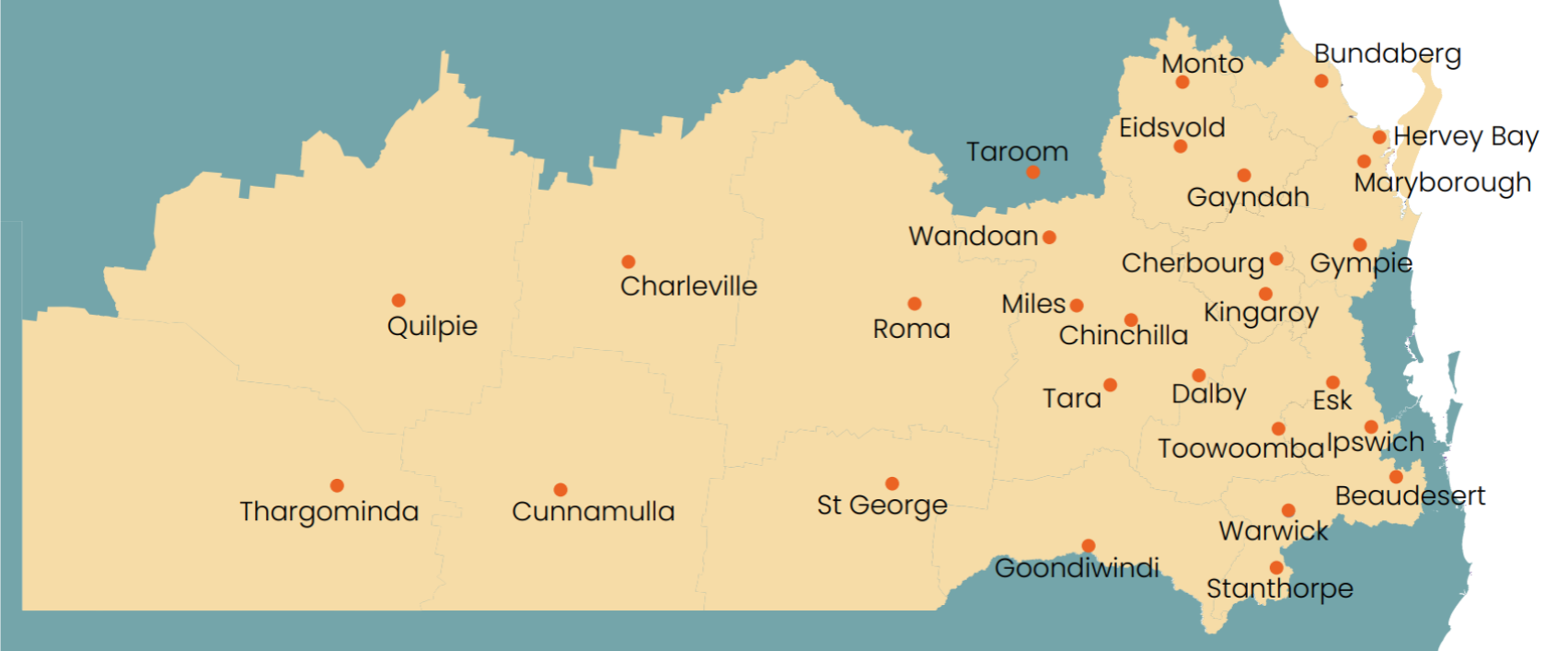
We can support people located in Toowoomba, Ipswich, Wide Bay (including Fraser Coast and South Burnett regions), and regional, rural, and remote areas across South-West Queensland. The map on this page illustrates the full advocacy service area.
Our dedicated and hard-working team of advocates support people across more than 400,000 square kilometres from the western and southern Queensland borders, up through the Granite Belt to Ipswich, and north through the South Burnett to the greater Wide Bay region.
If our advocates are not able to meet with you in person, they can meet
with you by phone or video.
Three Simple Steps
What to Expect
The Advocacy Client Journey
We understand that it can sometimes be daunting taking the first step to get in touch. Our friendly, compassionate and respectful team is here to help.
After your first appointment, we will book follow up appointments with you as needed until the matter has been finalised.
If you need support again in the future, you are welcome to get in touch with us.
1. Contact Us
Phone (07) 4616 9700
Email enquiries@tascnational.org.au
Visit our Toowoomba, Ipswich, Hervey Bay or Gympie offices
2. We Ask a Few Questions
To understand your situation and needs, we will ask a few questions.
We will check your eligibility.
If we are unable to help, we will connect you with another service.
3. Appointment Preparation
We will let you know what documents or information your advocate will need before your appointment.
If you need help getting your documents ready or don't have access to them, please let us know.
Referring a Client for Advocacy Support
How to Refer Your Client to Tasc for Advocacy Services
To refer a client to Tasc, please either:
- Completing the online referral form
- Complete the PDF referral form by downloading and emailing it to enquiries@tascnational.org.au
- Email brief details to enquiries@tascnational.org.au
- Phone Tasc on (07) 4616 9700
Advocacy FAQs
Frequently Asked Questions Relating to Advocacy Services
If you have questions which are not answered in the Advocacy Frequently Asked Questions on this page, please get in touch.
- enquiries@tascnational.org.au
- (07) 4616 9700
Send Tasc a question online (this link will open a pop-up form)
What Does Advocacy Mean?
Advocacy is speaking, writing or acting on behalf of another person to promote, protect and preserve their legal and human rights. Advocates use these tools to help empower you, understand your rights and have your wishes and concerns considered.
Do Advocacy Services Cost Anything?
No. Tasc's services are free.
We receive funding from the Queensland Government and other funders and donors to deliver advocacy services.
Our volunteers make a huge difference.
Solicitors and other professionals have played an integral role in Tasc since our humble beginnings in 1982 through donating their time and expertise through pro-bono work.
What is the Meaning of Self-Advocacy?
Self-advocacy is when you are empowered to speak, write or act on your own behalf.
Tasc can provide you with support, guidance and resources to help you self-advocate with confidence.
How do Tasc Advocates Describe Advocacy?
"Advocacy is about ensuring that vulnerable members of the community have their rights respected and have the chance to participate in society in the same way that other people do."
Thank you to Tasc staff for this photo from Gympie